The Southeast foodservice market has been growing for years. Florida alone hosts tens of millions of visitors annually, and the restaurants, hotels, and institutions feeding that demand need supply chains that move fast, hold temperature, and reach the whole state without ballooning freight costs.
For foodservice distributors and vendors looking for a Southeast foothold, the conversation keeps coming back to the same place: Orlando. Here’s why, and what it means for your supply chain.
The Geographic Case: Why Central Florida Changes the Math
Orlando sits at the center of the Florida peninsula, and that position is the reason it has become one of the most valuable logistics locations in the Southeast.
From Central Florida, a single-day delivery radius covers virtually the entire state. Tampa is about 90 minutes west. Daytona Beach is a little over an hour northeast. Jacksonville is roughly two and a half hours north, and Miami and Fort Lauderdale are three to four hours south. An Orlando-positioned warehouse can serve hotels, restaurants, theme parks, university systems, and healthcare across every major Florida market.
The road network backs this up. Our Orlando warehouse facility at 1700 Ave B in Kissimmee has quick access to I-4, the Florida Turnpike, SR 417, and US-192. For temperature-sensitive loads, shorter lanes mean better product integrity.
If you’re currently routing Southeast orders through Atlanta, Charlotte, or even Philadelphia, an Orlando position cuts freight miles, shortens transit time, and lowers per-unit delivery cost across Florida.
A Temperature-Controlled Warehouse in Orlando Built for Mixed SKUs
The facility totals 156,000 square feet of food-grade space across three dedicated temperature zones, so a diverse SKU mix can live under one roof:
Frozen: sub-zero storage for frozen proteins, desserts, prepared meals, and frozen juice concentrate.
Refrigerated: chilled space for produce, dairy, and deli items.
Ambient/dry: high-bay space for bottled water, supplements, and shelf-stable grocery.
The building also has 32 dock doors, which supports heavy inbound and outbound traffic at the same time. For cross-docking in Orlando, where perishables move straight from inbound trucks to outbound routes with minimal dwell time, that matters. Low dock count is one of the most common hidden bottlenecks in foodservice warehousing.
The practical effect: you can consolidate your Florida inventory into one credentialed, multi-temperature facility instead of a patchwork of smaller regional storage. One facility. One contact. One set of receiving protocols.
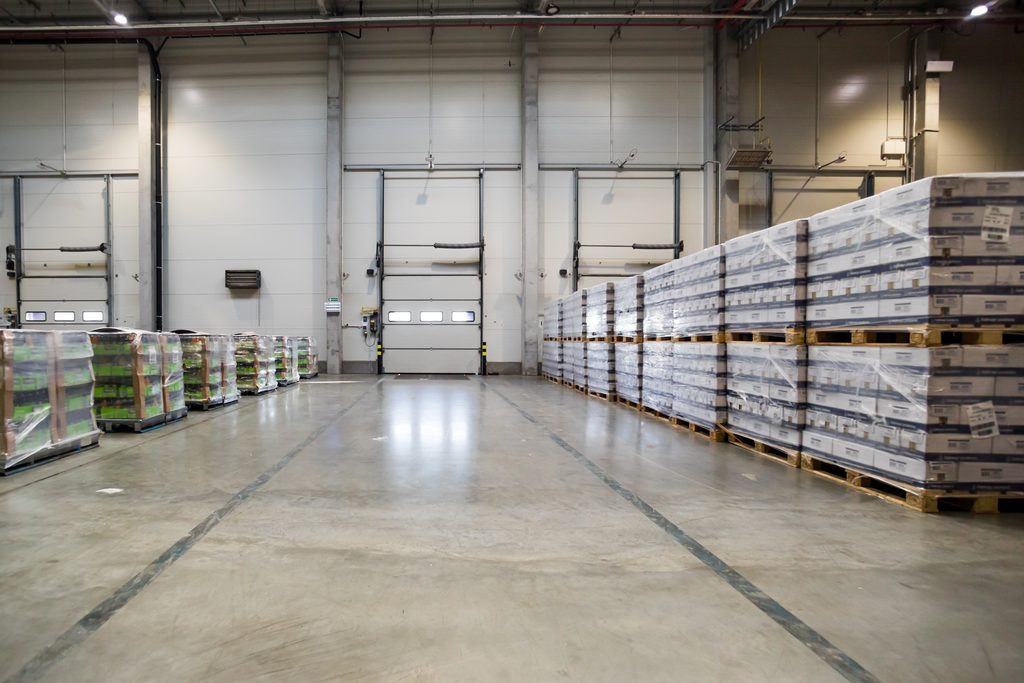
Storage warehouse interior.
Redistribution vs. Storage: The Distinction That Matters
Most warehouse searches return the same answer: here’s the square footage, here are the temperatures, here’s the rate. That’s pure storage. Honor Foods’ Orlando operation is something different: active redistribution.
Foodservice redistribution is a model where a redistributor (in this case, Honor Foods through Sunny Morning) consolidates products from many food vendors and sells them in mixed-SKU pallet orders to foodservice distributors. Those distributors can restock diverse product lines without placing large minimum orders with dozens of individual manufacturers.
For a vendor, that means your product doesn’t sit waiting for orders. It enters a network with existing distributor relationships across Florida and the Southeast. A regional dairy brand, a specialty protein supplier, or an emerging food manufacturer can position inventory in Orlando and reach that network from day one.
For distributors, it means a broader catalog across frozen, refrigerated, dry, dairy, and protein, with manageable minimums and delivery lanes already in place. With diesel costs, labor constraints, and tight budgets making manufacturer minimums harder to justify, that combination is a direct answer to the pressure Southeast distributors are under right now.
That’s a different value proposition than cubic footage on a rate card.
Who This Facility Is Built to Serve
The Orlando warehouse is built for food and beverage, not general merchandise. The best fits include:
Foodservice distributors serving Florida hotels, restaurants, healthcare systems, and schools who need a reliable Southeast supply point without building their own infrastructure. You get mixed-SKU orders at lower minimums and fewer vendor relationships to manage.
Food vendors and manufacturers looking to enter the Florida and Southeast market without the overhead of a dedicated distribution center. A position in our Orlando warehouse turns market entry from a capital project into a logistics partnership.
Companies with seasonal surges or overflow. Florida’s hospitality economy isn’t uniform across the year, and many warehouses demand multi-year commitments. We offer both short-term and long-term storage, so you can handle tourism-driven peaks without locking into permanent space. Beverage companies get heavy-duty racking and temperature stability for high-density loads like orange juice concentrate.
If you fall into one of these groups and don’t have a Southeast warehouse strategy yet, now is the time to move. Space is available, but it fills quickly ahead of peak season. Request warehouse availability today.
Established in Florida Before You Needed It
The Kissimmee facility is a recent acquisition, but it isn’t a new venture for the Honor Foods family. Sunny Morning, an Honor Foods company, has run distribution in Florida for years. That means distributor relationships, delivery lanes, and familiarity with Florida’s regulations and climate are already in place.
Honor Foods, a Burris Logistics Company, also brings over 100 years of cold chain expertise. That experience matters when you’re running frozen loads through a Central Florida summer or managing high-turnover inventory for theme park resorts and convention hotels.
When you start your partnership with Honor Foods, you’re not onboarding to a new operation. You’re connecting to an existing network.
How to Evaluate an Orlando Warehouse Partner
If you’re comparing Southeast foodservice warehouse options, these questions separate adequate from exceptional:
Can they handle all three temperature zones in one location?
Honor Foods, a Burris Logistics Company, was founded in 1949 as a pick-up only, broadline redistributor. Since then, Honor Foods has grown into the Mid-Atlantic region’s premier provider of frozen, refrigerated, dry, protein, and dairy products, representing
more than 800 brand-name food suppliers and carrying more than 7,000 in-stock items. Honor Foods brands R.W. Zant and Sunny Morning provide additional protein and dairy expertise on the West Coast and in the Southeast. In addition, our exclusive house brands — Colony Lane,Valley Fresh, Sommer Maid, and Sunny Morning have a well-earned reputation for top quality and value at competitive prices.
Great products and prices are just part of the Honor Foods value-add. We pride ourselves in having a Team of dedicated professionals who manage each partnership. Our commitment to your business needs is what makes us unique.